
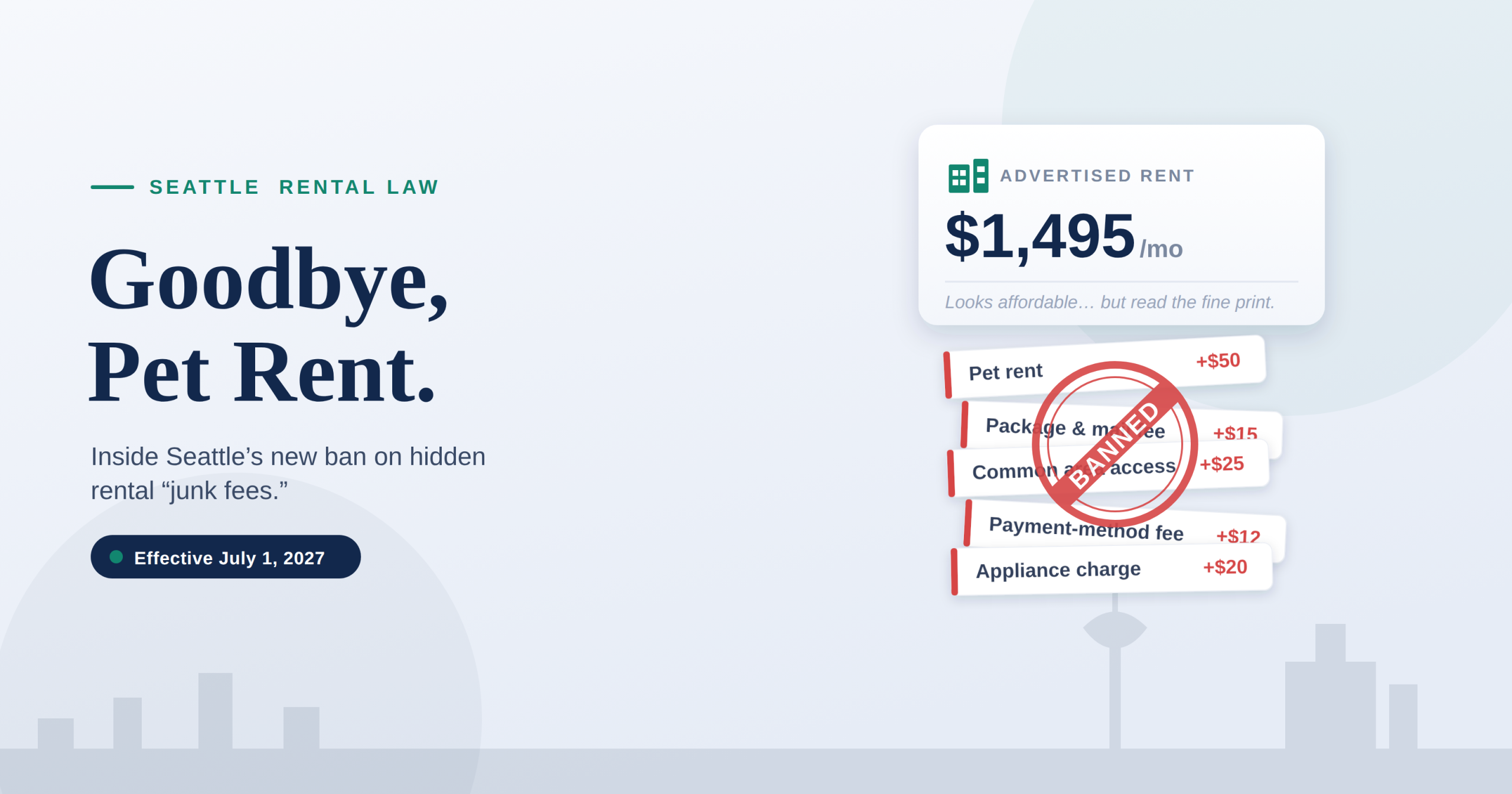
Finding an apartment in Seattle has long been an exercise in complex math. For years, prospective tenants have browsed rental listings and found a price that seemed to fit their budget, only to be hit with a slew of add-on fees at the lease signing. From monthly pet rent to package processing charges, these recurring “junk fees” have quietly inflated the cost of living for thousands of residents.
However, a sweeping change is coming to the Emerald City’s housing market. On August 11, 2026, the Seattle City Council unanimously passed Council Bill 121254, a landmark ordinance designed to ban hidden rental add-ons and mandate crystal-clear, upfront pricing. The legislation fundamentally rewrites the rules of engagement between landlords and tenants.
The push for this legislation stems from the mounting financial pressures placed on local renters. According to the mayor’s office, more than half of Seattle residents rent their homes. Within the broader region, 48% of households are considered cost-burdened, meaning they spend over 30% of their income on housing.
The True Cost of Renting in Seattle
Compounding this affordability crisis is the sheer prevalence of hidden costs. Municipal surveys indicate that 58% of Seattle renters currently pay extra fees on top of their base monthly rent. What might look like a reasonably priced apartment online can quickly exceed a family’s budget once administrative surcharges, amenity fees, and pet charges are factored into the monthly total.
The New Framework: Banned Fees and the “Allow-List”
At the heart of the new ordinance is a major structural shift in how rental costs are regulated. Moving forward, Seattle will operate on an “allow-list” model. This means that unless a specific fee is explicitly authorized by the city’s municipal code, it is strictly prohibited.
Once the law goes into effect, property managers and landlords will be banned from charging for:
- Pet Rent: Landlords can no longer charge ongoing monthly fees simply for housing a pet, a practice that advocates argue unfairly penalizes pet owners.
- Mail and Package Fees: Mandatory charges for receiving mail or using package locker collection rooms are eliminated.
- Common Area Access: Tenants cannot be charged extra monthly fees to access standard common spaces or shared amenities.
- Non-Preferred Payment Penalties: Surcharges for paying rent via paper check, ACH, or money order instead of a landlord’s preferred online portal are outlawed.
- In-Unit Appliances: Separate monthly charges for the use of standard appliances, such as washing machines or air conditioners, are banned.
- Administrative Tenancy Changes: Fees for adding or removing a roommate from an existing lease agreement are no longer permitted.
What Can Landlords Still Charge?
The ordinance is designed to eliminate arbitrary and hidden costs, not to prevent landlords from covering legitimate, standard operational expenses. Property owners retain the right to collect transparent, legally permitted charges, which include:
- Application screening and background check fees.
- Refundable security deposits and standard move-in fees.
- One-time pet damage deposits, which remain distinctly separate from the newly banned recurring pet rent.
- Standard utility charges, late rent penalties, and insufficient funds fees.
- Direct, documented costs for key replacements or tenant lockouts.
Mandatory Upfront Transparency
Eliminating surprise fees is only half of the equation. The ordinance also demands pricing transparency. Before a prospective renter submits an application or pays any non-refundable deposits, landlords must provide a comprehensive disclosure of the total monthly obligations. Rental listings and advertisements must clearly state the base rent, any included or separate utilities, and all legally permitted optional or mandatory fees.
To back up these new protections, the Seattle Department of Construction and Inspections (SDCI) has been granted the authority to investigate violations. The legislation also establishes direct remedies for tenants if a landlord fails to comply with the disclosure and fee requirements.
Crucial Deadlines: The 180-Day Notice Rule
The ordinance officially takes effect on July 1, 2027, applying to any new rental agreements or renewals signed after that date. However, landlords must act much sooner. Because Seattle law requires property owners to give tenants a 180-day advance notice for any change in housing costs, the practical deadline for compliance hits six months early.
For leases renewing in early July 2027, landlords must finalize their updated, fee-compliant pricing structures and issue required notices by early January 2027. This transition period gives property managers the necessary runway to audit their leases, remove banned charges, and fold legitimate operational costs into a transparent base rent figure.
Ultimately, this legislation aims to level the playing field, ensuring that the advertised price of a Seattle apartment reflects the true and complete cost of making it a home.
If you have questions about legal compliance, you can reach us at https://martinkreshon.com or call (206) 929-0609. You can also find reviews for Martin on Google and Avvo.