
Category: Compliance
-
Are You Registered to Hire Remote Workers in Washington?
An out-of-state company hires a software developer who lives in Washington and works from home. Does that single remote employee hire mean the company is doing business in Washington? Must it register with the Secretary of State? However, as of 2026, the Legislature answered the Remote employee registration portion. It left the tax half open.…
-
Noncompetes Were Already Getting Harder to Enforce: David v. Freedom Vans
Washington’s 2026 ban on noncompetes did not come out of nowhere. Even before it passed, Washington courts and the 2019 noncompete statute were steadily narrowing what employers could enforce. The Washington Supreme Court’s 2025 decision in David v. Freedom Vans, 4 Wash.3d 242 (2025) (En Banc) is a useful marker of that trend—and a preview…
-
What Still Works After the Noncompete Ban: Nonsolicitation, Confidentiality, and the Sale-of-Business Exception
Washington’s ban on noncompetes (Chapter 149, Laws of 2026) does not leave employers with nothing. It preserves a short, narrowly drawn set of protections. The catch is that each one is defined tightly, and the statute tells courts to construe these exceptions narrowly. Here is what survives after June 30, 2027—and where the traps are.…
-
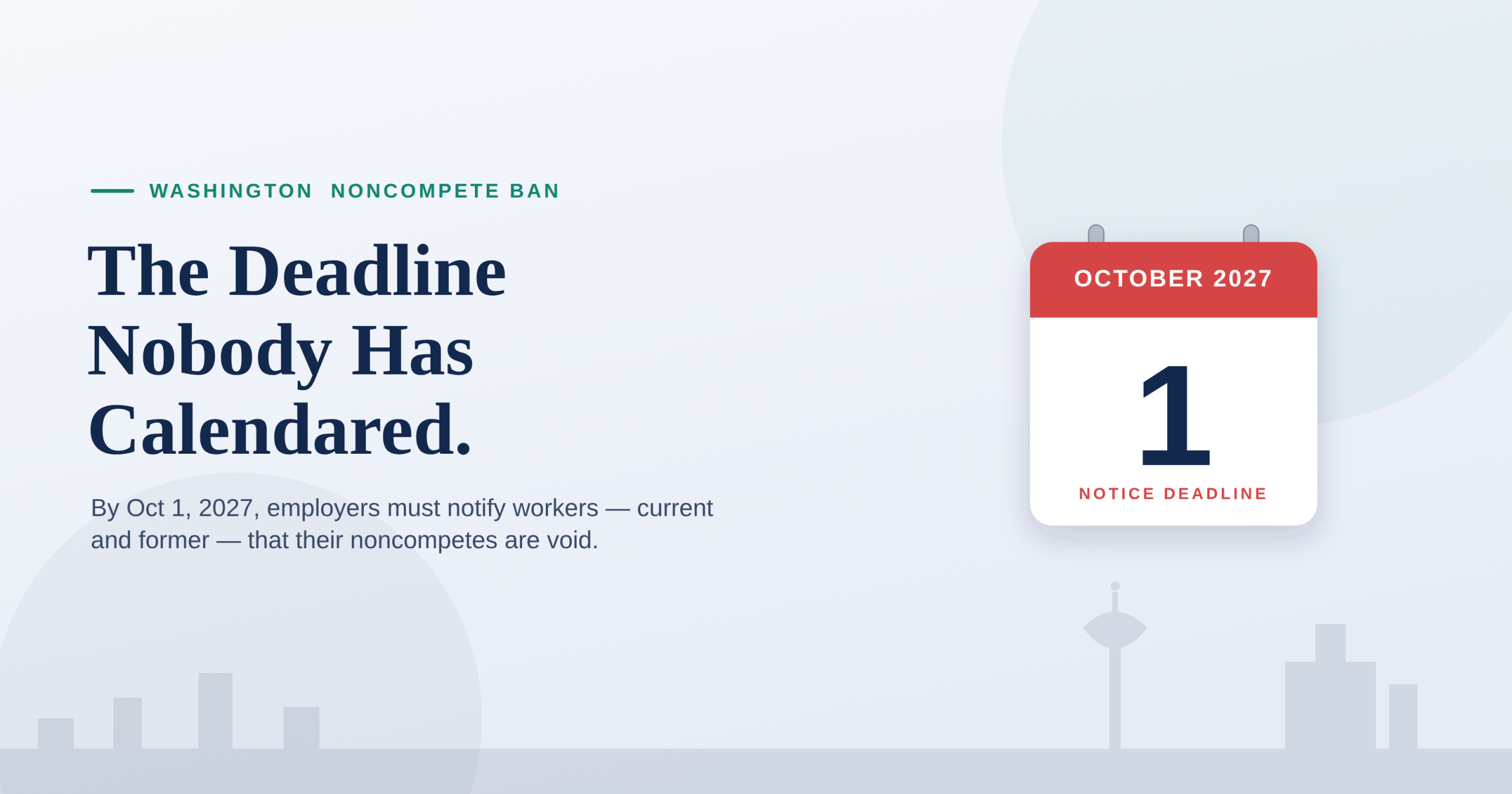
The Noncompete Notice Cliff – Don’t Fall October 1, 2027
Washington’s non-compete ban comes with an affirmative duty most employers have not yet put on the calendar. It is not enough to stop enforcing noncompetes—by a fixed date, employers must proactively tell affected workers that their covenants are dead. The requirement The enacted law, amending chapter 49.62 RCW, provides that by October 1, 2027, an…
-
Washington’s 2027 Minimum Wage: What to Expect
Every fall, Washington employers get one number they cannot plan payroll without: the next year’s minimum wage. Here is what is coming, when, and why it also quietly resets a second threshold that catches salaried employers off guard. The mechanics of the annual increase Washington’s minimum wage is adjusted for inflation every year. Under the…
-

Your Bonus Clawback Is Now a Noncompete
The most overlooked part of Washington’s new noncompete ban is that it does not only target clauses labeled “noncompete.” It reaches a whole category of compensation provisions that most employers never think of as noncompetes at all—forfeiture clauses, bonus clawbacks, and “stay-or-pay” arrangements. The expanded definition Under the enacted law amending chapter 49.62 RCW, a…
-
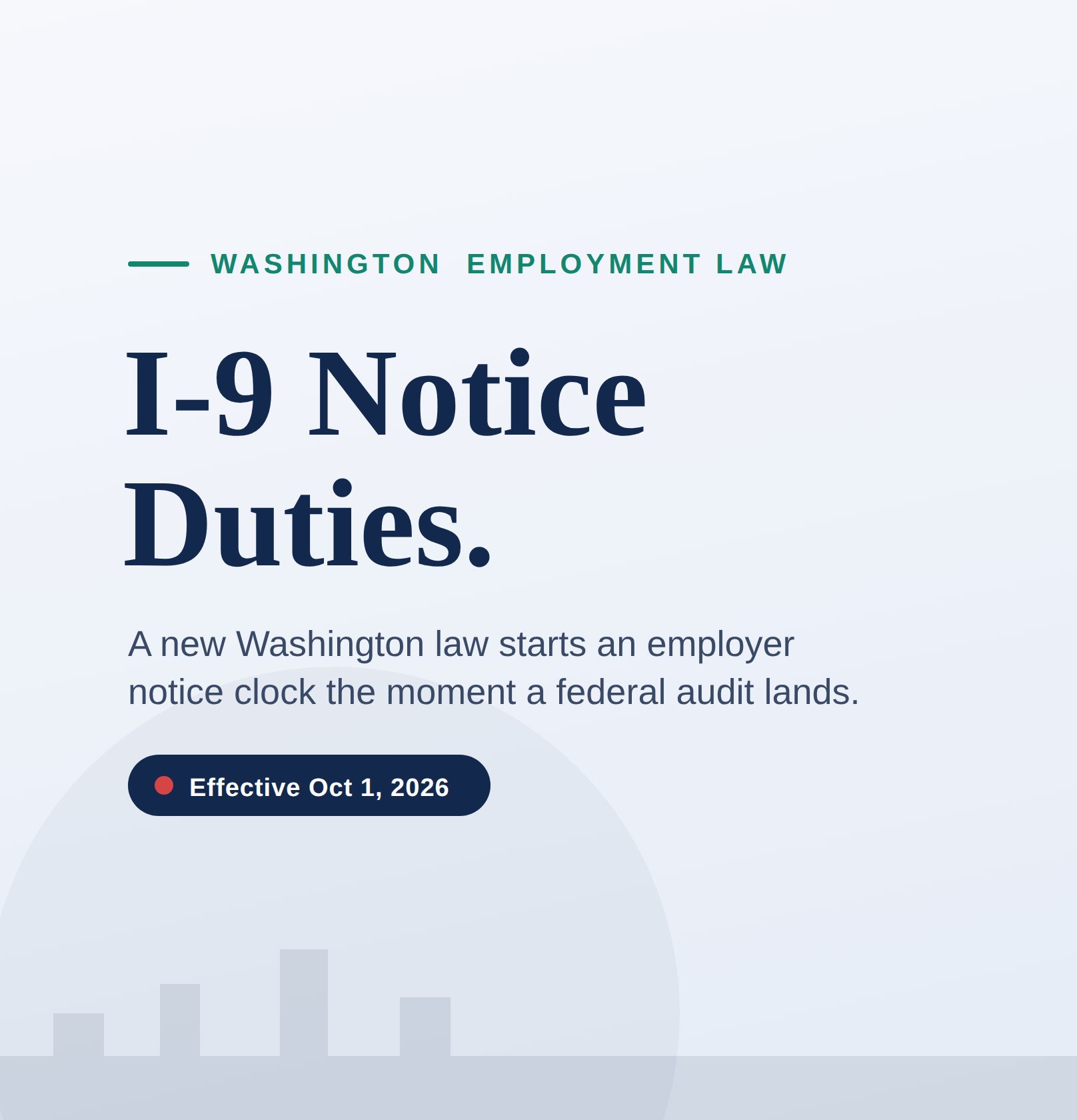
Washington Employers Get New I-9 Inspection Notice Duties
Washington enacted a new Immigrant Worker Protection Act this year, and its employer-facing duties are scheduled to take effect on October 1, 2026. The law was passed as 2SHB 2105 (Chapter 240, Laws of 2026), a bill requested by the Attorney General. What makes it worth flagging now is that it applies to essentially every…
-
Behind on Paid Leave Premiums? Interest, Penalties, and a Grant You Could Lose
Washington’s Paid Family & Medical Leave (PFML) program is funded by a premium that nearly every Washington employer has to report and pay to the Employment Security Department (ESD) every quarter. It is easy to let a quarter slide—especially for a small business without a dedicated payroll department—but a past-due PFML balance is one of…
-
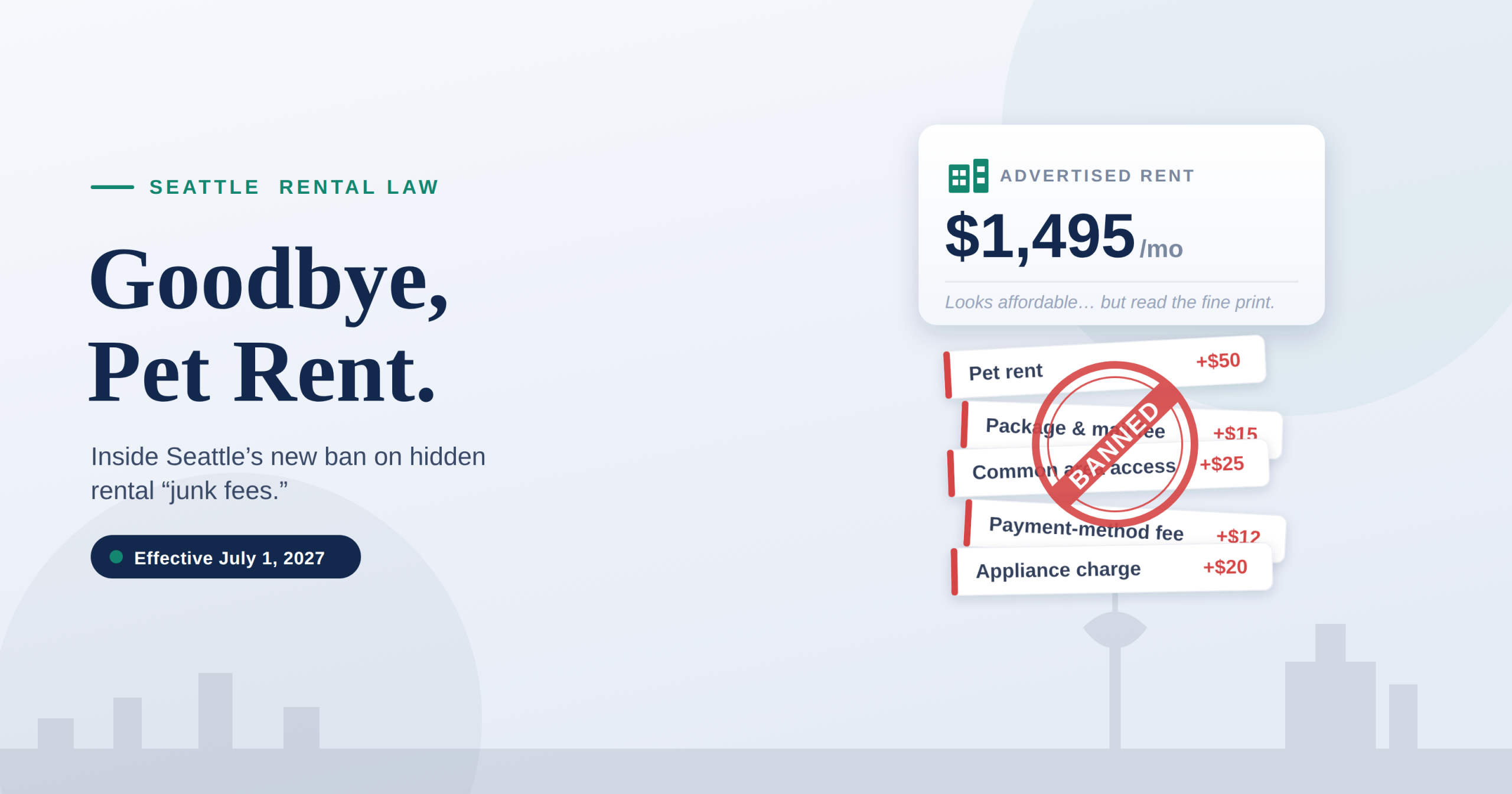
Goodbye, Pet Rent: Everything You Need to Know About Seattle’s New Rental Junk Fee Ban
Finding an apartment in Seattle has long been an exercise in complex math. For years, prospective tenants have browsed rental listings and found a price that seemed to fit their budget, only to be hit with a slew of add-on fees at the lease signing. From monthly pet rent to package processing charges, these recurring…
-
FinCEN Permanently Ends Beneficial Ownership Reporting Requirements for Millions of Small Business Owners
The U.S. Department of the Treasury’s Financial Crimes Enforcement Network (FinCEN) is issuing a final rule that permanently removes the requirement for U.S. companies and U.S. persons to report beneficial ownership information to FinCEN under the Corporate Transparency Act. The final rule became effective on August 14, 2026. FinCEN today also announced that it will delete previously reported information…