
Category: Business lawyer
-
What Still Works After the Noncompete Ban: Nonsolicitation, Confidentiality, and the Sale-of-Business Exception
Washington’s ban on noncompetes (Chapter 149, Laws of 2026) does not leave employers with nothing. It preserves a short, narrowly drawn set of protections. The catch is that each one is defined tightly, and the statute tells courts to construe these exceptions narrowly. Here is what survives after June 30, 2027—and where the traps are.…
-
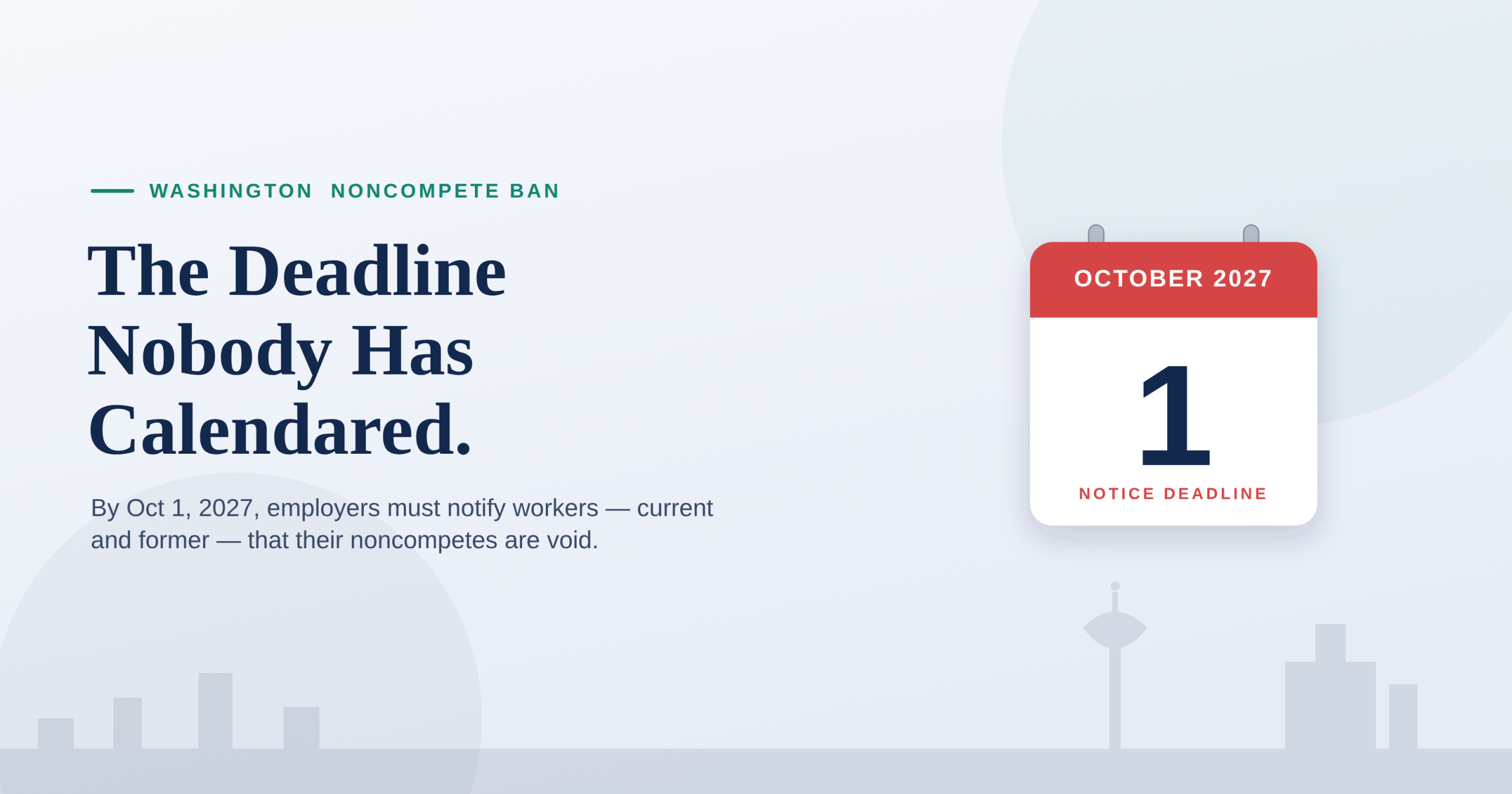
The Noncompete Notice Cliff – Don’t Fall October 1, 2027
Washington’s non-compete ban comes with an affirmative duty most employers have not yet put on the calendar. It is not enough to stop enforcing noncompetes—by a fixed date, employers must proactively tell affected workers that their covenants are dead. The requirement The enacted law, amending chapter 49.62 RCW, provides that by October 1, 2027, an…
-
Washington’s 2027 Minimum Wage: What to Expect
Every fall, Washington employers get one number they cannot plan payroll without: the next year’s minimum wage. Here is what is coming, when, and why it also quietly resets a second threshold that catches salaried employers off guard. The mechanics of the annual increase Washington’s minimum wage is adjusted for inflation every year. Under the…
-
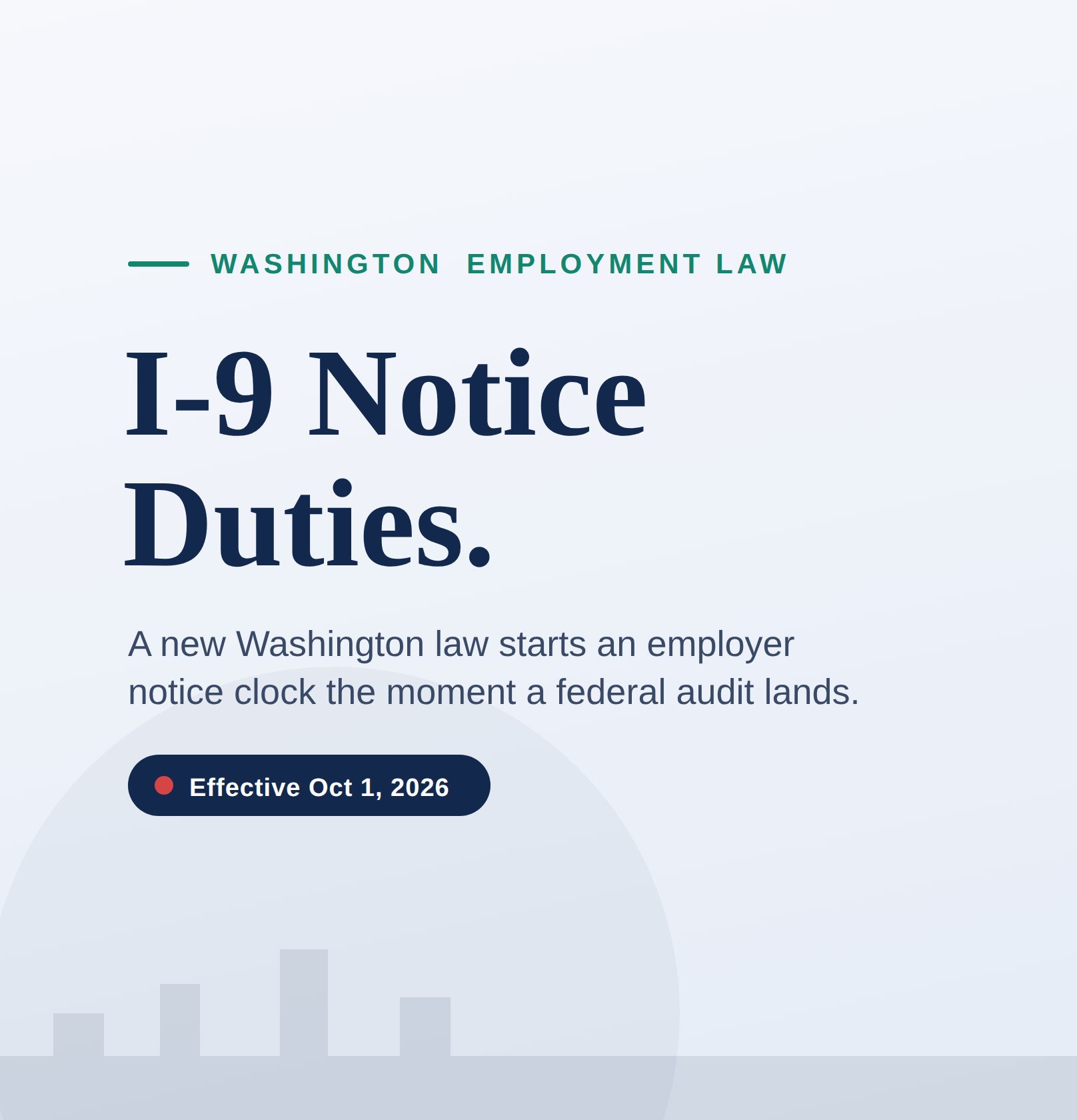
Washington Employers Get New I-9 Inspection Notice Duties
Washington enacted a new Immigrant Worker Protection Act this year, and its employer-facing duties are scheduled to take effect on October 1, 2026. The law was passed as 2SHB 2105 (Chapter 240, Laws of 2026), a bill requested by the Attorney General. What makes it worth flagging now is that it applies to essentially every…
-
Behind on Paid Leave Premiums? Interest, Penalties, and a Grant You Could Lose
Washington’s Paid Family & Medical Leave (PFML) program is funded by a premium that nearly every Washington employer has to report and pay to the Employment Security Department (ESD) every quarter. It is easy to let a quarter slide—especially for a small business without a dedicated payroll department—but a past-due PFML balance is one of…
-
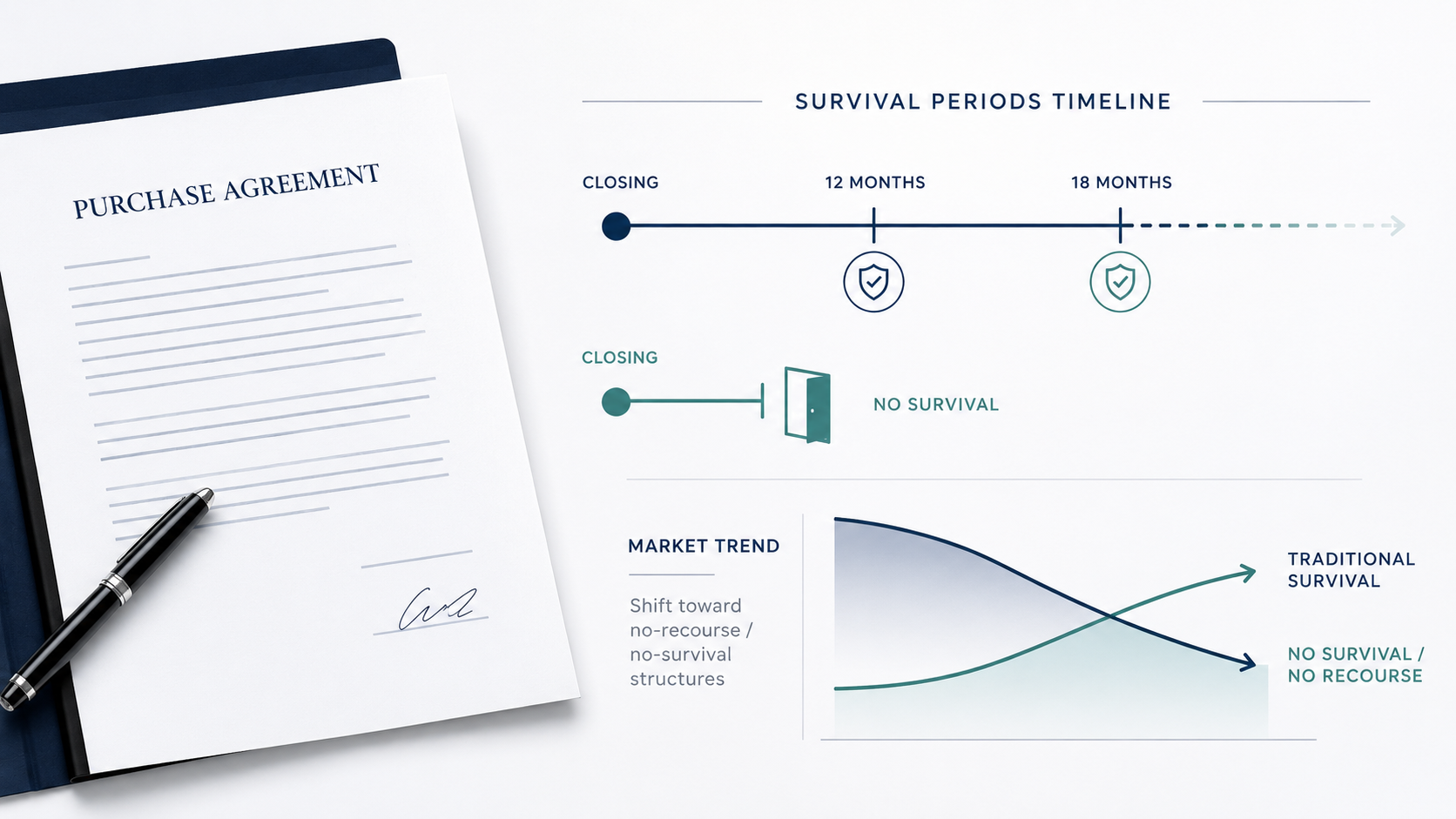
M&A Trends – Survival Periods and No-Recourse Terms
In the high-stakes arena of M&A, the survival period—the window during which a buyer can bring claims for breaches of representations and warranties—is a primary lever for risk allocation. The 2025 ABA Deal Points Study reveals a market increasingly defined by a binary choice: traditional indemnification or the “public-style” no-survival model. The Decline of Express…
-

Understanding Washington’s Tax Penalties and How the Voluntary Disclosure Program Can Help
Operating a business in Washington comes with many responsibilities, and staying on top of state tax obligations is one of the most critical. However, many business owners—especially those operating from out of state or just starting out—may unknowingly overlook certain tax requirements. Ignoring these obligations can lead to significant financial penalties. The good news? The…
-

New reporting classifications for Service and Other Activities B&O
Effective Jan. 1, 2026, the following Service and Other Activities B&O tax classifications have been renamed as follows: Please note: If you previously reported under the combined Service & Other Activities and/or Gambling Contests of Chance (less than $50,000 a year) B&O tax classification and you have gross income from gambling activities less than $50,000 per year, you must begin…
-

LLC vs. PLLC in Washington: A Guide for Professionals
If you are an architect, doctor, dentist, lawyer, or accountant looking to hang your shingle in Washington, you might hit a roadblock when you go to register your business. You select “Limited Liability Company” (LLC) on the form, only to find out you might actually be required to form a Professional Limited Liability Company, aka…
-

Navigating Contractor Liens in Washington
For contractors, subcontractors, and suppliers in Washington, understanding construction lien laws is crucial for ensuring payment for your hard work and materials. These laws, primarily found in RCW Chapter 60.04, provide a powerful tool to secure your right to payment by placing a claim against the improved property. However, the system comes with strict requirements…