
Category: Purchase Agreement
-
Disclosure Schedules: Where the Real Deal Lives
The representations in a purchase agreement make broad promises. The disclosure schedules are where the seller provides the exceptions. They are long, they are tedious, and they are where a surprising amount of a deal’s risk is actually decided. What they are The schedules are a numbered set of exceptions keyed to the representations. Where…
-
The Letter of Intent: Which Parts Actually Bind You
The letter of intent, also known as a LOI, is usually the first document in a business sale, and it is routinely treated as a casual handshake. It is not. A poorly written LOI can bind you to terms you thought were still open, and it sets the deal on a path that is hard…
-
Materiality Scrapes in Purchase Agreements: Why Buyers Want Them and Sellers Push Back
A materiality scrape is often a heavily negotiated clause in a purchase agreement, and it is easy to miss if you do not know to look for it. In plain terms, a materiality scrape tells the reader to ignore the words “material,” “materiality,” and “material adverse effect” in the seller’s representations and warranties for certain…
-
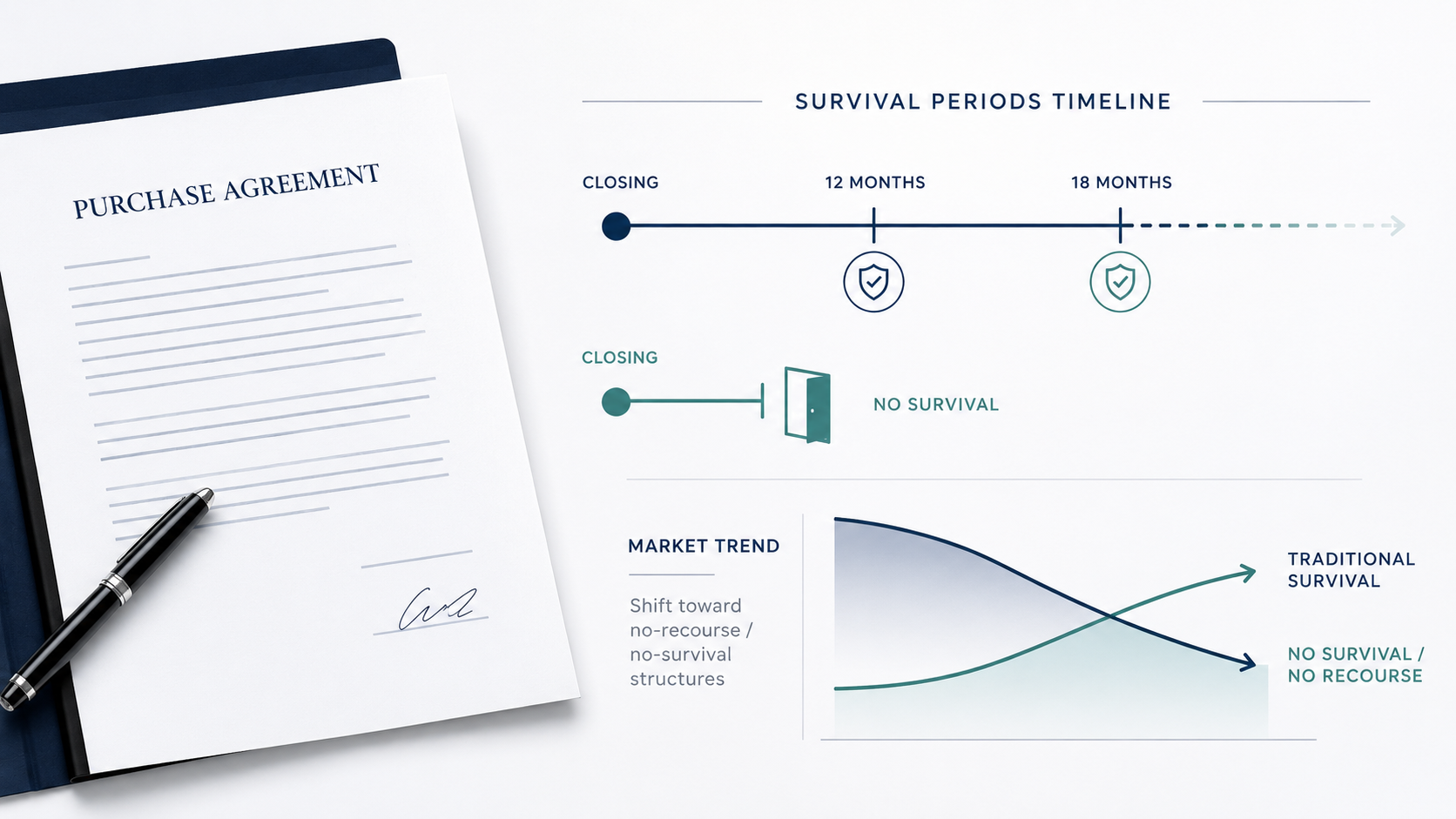
M&A Trends – Survival Periods and No-Recourse Terms
In the high-stakes arena of M&A, the survival period—the window during which a buyer can bring claims for breaches of representations and warranties—is a primary lever for risk allocation. The 2025 ABA Deal Points Study reveals a market increasingly defined by a binary choice: traditional indemnification or the “public-style” no-survival model. The Decline of Express…
-
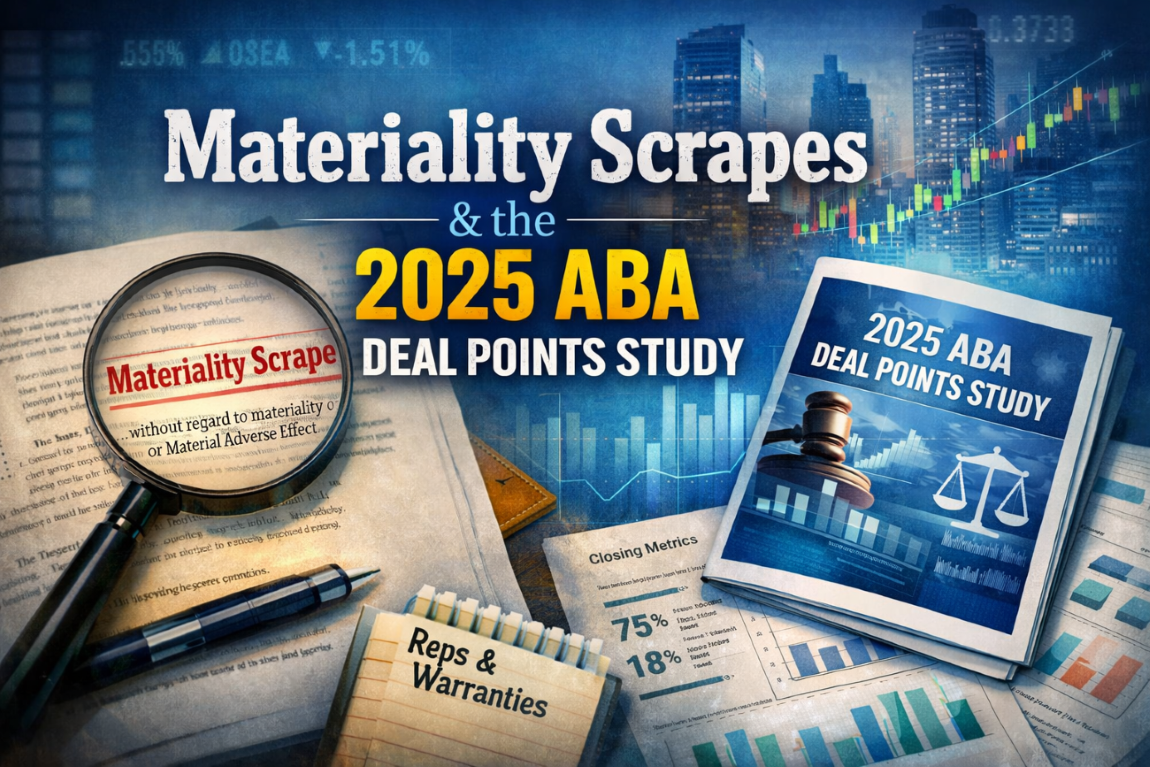
Insights into the 2025 Deal Points Study: Navigating Baskets and the Ubiquity of Materiality Scrapes
Risk allocation in mergers & acquisitions (M&A) isn’t just about how long a buyer has to make a claim, but how much loss must occur before a claim is valid. The 2025 ABA Study provides critical data on “baskets”—the minimum loss threshold—and the “materiality scrape,” a provision that significantly lowers the buyer’s burden of proof.…